

Meditation, for many years, was something I approached casually. I believed it was a tool for stress relief or a way to relax after a long day. But when I encountered the teachings of Paramahansa Yogananda, particularly his Autobiography of a Yogi, that perspective was entirely transformed.
Initially, my attempts at meditation often left me frustrated. My mind would race through to-do lists, regrets, and distractions. My body would grow restless, and after a few minutes, I felt more agitated than peaceful. I realise now that I had misunderstood what meditation truly is. It was only when I began to immerse myself in Yogananda’s teachings that I discovered a deeper purpose to the practice—not just mental quiet but awakening the soul.
According to Yogananda, meditation is a direct pathway to experiencing the Divine within. It’s not simply about sitting still or calming the mind; it’s about consciously connecting with the infinite energy that sustains the universe. This idea stirred something profound in me. I wanted to explore this deeper possibility.
One of the first changes I made was creating a sacred space for my practice. Yogananda emphasises the importance of meditating in the same place every day. I chose a quiet corner in my room, added a small altar, lit incense, and made it a point to keep the area clean and serene. Over time, I began to sense a subtle shift in energy whenever I entered that space. It became easier to drop into stillness.
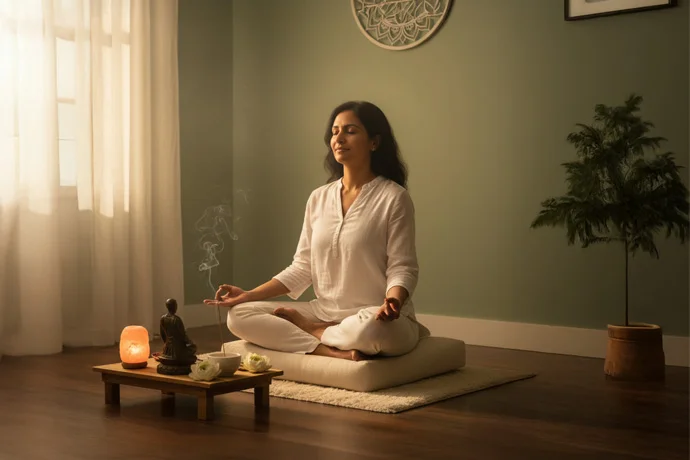
Posture was another revelation. I hadn’t realised how much slouching or discomfort could disrupt the energy flow within the body. I learnt to keep my spine straight yet relaxed. The concept of the spine being an energy channel was eye-opening. As I aligned my posture, my concentration deepened, and I began to experience an inner calm that previously eluded me.
Breathwork, too, became an essential part of my journey. Yogananda taught that breath and mind are intricately linked. I began practising the Hong-Sau technique daily. With each inhalation and exhalation, mentally repeating “Hong” and “Sau,” I felt a gradual calming of the mental chatter. My breath became slower, more refined, and my awareness began to expand.
Yet, like most people, I struggled with the wandering mind. Thoughts would intrude, memories would arise, and focus would falter. But Yogananda’s compassionate advice helped me shift my approach. Instead of battling my thoughts, I learnt to watch them gently, like clouds passing across the sky, and bring my attention back to the point between my eyebrows—the spiritual eye. Over time, this practice became more natural, and moments of genuine stillness began to arise.
Then came the experiences that changed everything. On certain days, during deep meditation, I began to perceive a soft light behind closed eyes, often bluish or golden. At times, I would hear faint inner sounds—like a distant bell or a gentle humming. There were sessions where I felt a wave of peace descend, so profound that I would sit still for what felt like minutes, only to realise an hour had passed.
These weren’t hallucinations or wishful thinking. They were real, tangible shifts in consciousness. For the first time, I truly felt that I was more than this body and this mind. I sensed, however fleetingly, my deeper essence—the soul.
And yet, Yogananda reminds us that these experiences are not the goal; they are signposts. The real purpose of meditation is to attain Samadhi—a state of total union with the Divine. Though I have not yet reached this exalted state, the path feels clearer than ever. I now understand that true meditation is a science. It requires discipline, patience, and love.
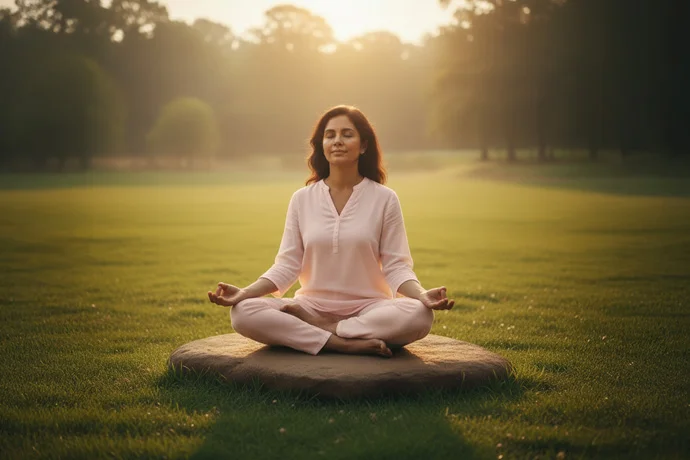
To make this a lifelong practice, I committed to meditating daily, no matter what. Even if I could spare only 20 minutes, I would show up. Gradually, it became a part of my life, like eating or sleeping. I also began to support my inner work by simplifying my lifestyle—eating lighter food, avoiding negativity, and being mindful of how I spent my time and energy.
What has surprised me most is how meditation has begun to spill into the rest of my life. I find myself breathing consciously in moments of stress, pausing before reacting, and maintaining a deeper sense of awareness throughout the day. It’s as though meditation has become not just a practice, but a way of being.
For anyone beginning this journey, I offer this: follow the teachings with sincerity, make space for silence, and allow your practice to deepen slowly, organically. You may not always see immediate results, but the transformation is happening. One breath, one moment, one still point at a time.
As Yogananda beautifully expressed, “When the mind is calm, how quickly, how smoothly, how beautifully you will perceive everything.”
Through his teachings, I have come to believe that the journey to the Self is the most important journey one can take—a journey from restlessness to stillness, from identity to soul, and ultimately, from self to Spirit.
– Anonymous Sadhak

